Online Finance Fraud in South Africa: How to Protect Yourself
Published 01 Mar 2026
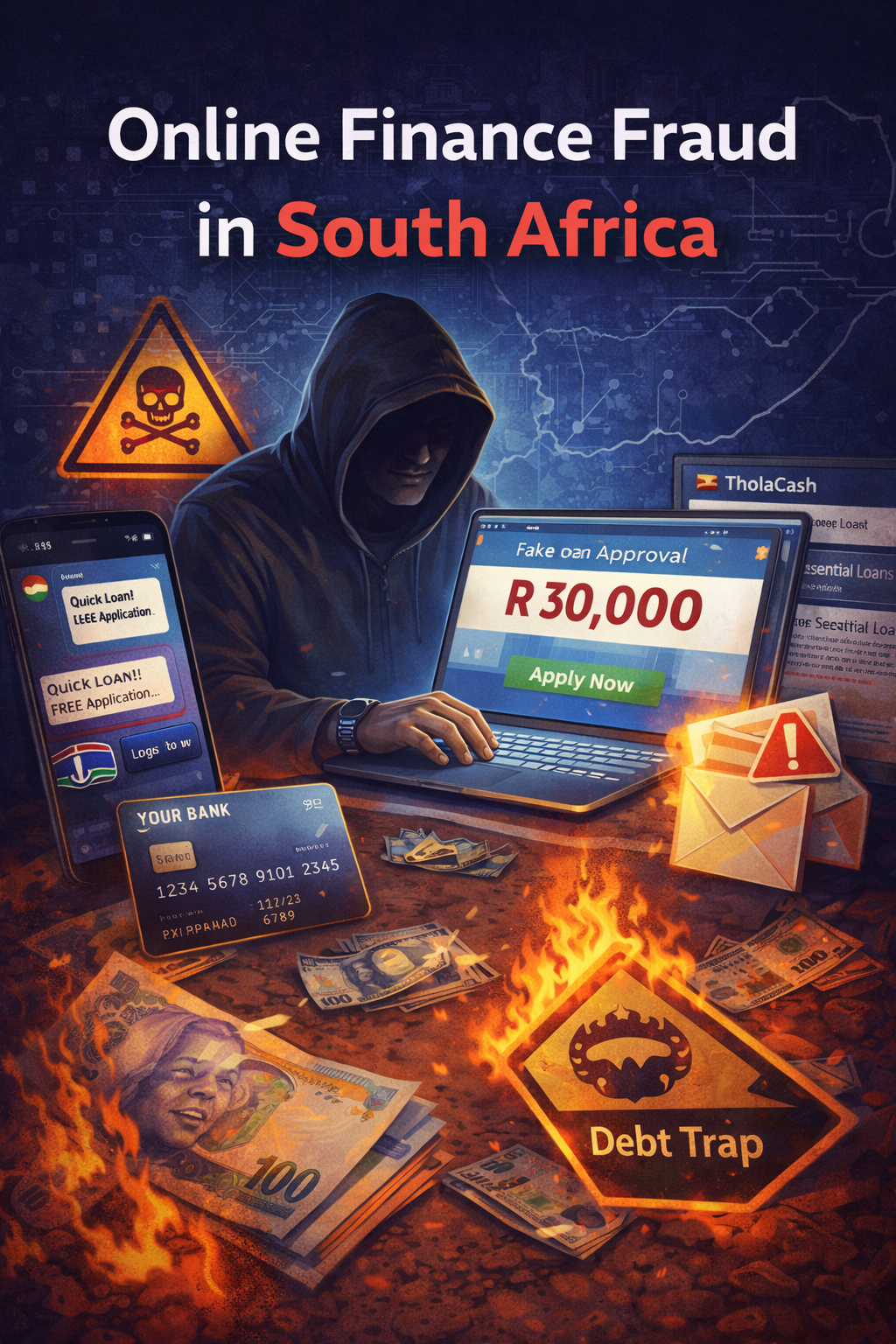
Online Finance Fraud in South Africa: How to Protect Yourself As more financial services move online, criminals are finding new ways to scam unsuspecting consumers. Online finance fraud is rising in South Africa, affecting people who apply for loans, use online banking, or respond to financial offers on social media. Understanding how these scams work is the first step in protecting yourself. What Is Online Finance Fraud? Online finance fraud happens when criminals use the internet to trick people into: Sharing personal information Sending money Paying fake “fees” Clicking malicious links Providing banking details Fraudsters often impersonate legitimate lenders, banks, or financial institutions to appear trustworthy. Common Online Finance Scams 1. Fake Loan Approval Scams You receive a message saying you’ve been “pre-approved” for a large loan. Before receiving funds, you’re asked to pay: An upfront fee Insurance cost “Processing” charge Admin fee Once payment is made, the scammer disappears. Red flag: Legitimate lenders do not ask for upfront payment before disbursing a loan. 2. Phishing Emails and SMS Scammers send messages pretending to be from your bank or a financial provider. These messages often say: “Your account has been compromised.” “Verify your details urgently.” “Click here to avoid suspension.” The link leads to a fake website designed to steal your login details. 3. Social Media Impersonation Fraudsters create fake profiles pretending to represent legitimate lenders. They use: Company logos Fake testimonials Stolen website content They then request personal documents or payments via private message. 4. WhatsApp Loan Scams You may receive a WhatsApp message offering “instant approval” with no credit checks. These scammers often request: Copies of your ID Bank statements Upfront “release fees” After receiving documents or money, they disappear — or misuse your information. The Risks of Online Financial Fraud Online fraud can result in: Loss of money Identity theft Unauthorized bank transactions Damaged credit profile Emotional stress Recovering from fraud can take months and may involve lengthy disputes with banks and authorities. How to Protect Yourself Here are simple steps to stay safe: ✅ Verify Before You Trust Always confirm that the lender is registered and has a legitimate website and official contact details. ✅ Never Pay Upfront Loan Fees Legitimate lenders do not require upfront payments before releasing funds. ✅ Check Website URLs Carefully Look for: HTTPS security Correct spelling Professional design Contact details that match official listings ✅ Protect Your Personal Information Never share: Banking PINs OTP codes Passwords Card CVV numbers Even a “support agent” should never ask for these. ✅ Contact the Company Directly If you receive a suspicious message, contact the company using the phone number listed on their official website — not the number in the message. What To Do If You’ve Been Scammed If you suspect fraud: Contact your bank immediately. Change your passwords. Report the scam to relevant authorities. Monitor your credit profile. Acting quickly can reduce the damage. Final Thoughts Online financial services are convenient — but convenience should never replace caution. Before applying for any loan or sharing personal information online, take a moment to verify: Is this company legitimate? Are they asking for upfront fees? Does the website look secure? Financial awareness is your first line of defense against fraud. Stay informed. Stay cautious. Stay protected.