Online Finance Fraud in South Africa: How It Happens and How to Protect Yourself
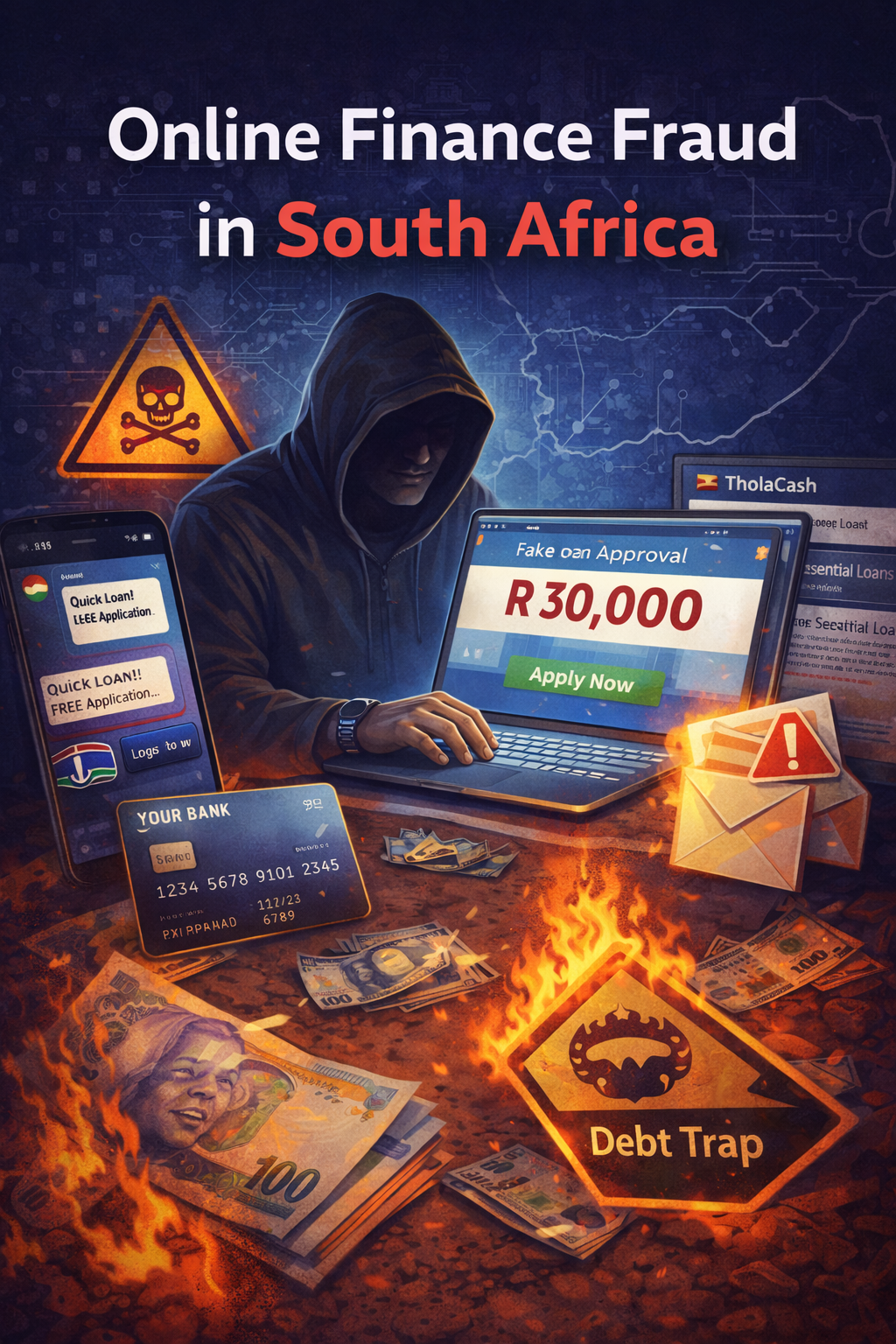
Online Finance Fraud in South Africa: How It Happens and How to Protect Yourself As more South Africans use the internet for banking, loans, and shopping, online financial fraud has become a growing problem. Criminals use technology and social engineering to trick people into sharing personal information, sending money, or giving access to their bank accounts. Understanding how these scams work is the first step toward protecting yourself and your finances. What Is Online Financial Fraud? Online financial fraud happens when criminals use the internet, mobile phones, or digital platforms to steal money or sensitive financial information. Fraudsters often pretend to be: Banks Loan providers Online stores Government institutions Investment companies They use fake websites, emails, phone calls, and social media messages to gain trust and steal money. Common Types of Online Finance Fraud in South Africa 1. Phishing Scams Phishing is when scammers send emails, SMS messages, or WhatsApp messages pretending to be from a bank or financial institution. The message usually contains a link to a fake website that looks like a real banking page. When victims enter their login details, the criminals steal the information. Common phishing messages include: “Your bank account has been suspended. Click here to verify.” “Unusual activity detected. Please confirm your details.” 2. Fake Loan Offers Fraudsters often advertise instant loans on social media or WhatsApp. These scams usually promise: Guaranteed approval No credit checks Very low interest rates Victims are then asked to pay “processing fees” or “insurance fees” before the loan is released. Once the money is paid, the scammer disappears. Legitimate lenders registered with the National Credit Regulator will never ask for upfront payments before a loan is approved. 3. Investment Scams Many South Africans have lost money to fake investment opportunities promising extremely high returns. These scams often promote: Cryptocurrency investments Forex trading platforms “Guaranteed” investment profits If an investment promises very high returns with little or no risk, it is usually a scam. 4. SIM Swap Fraud SIM swap fraud happens when criminals trick mobile providers into transferring your phone number to a new SIM card. Once they control your number, they can: Intercept banking OTPs Reset banking passwords Access your online banking accounts 5. Online Marketplace Fraud Scammers also target buyers and sellers on online marketplaces. Typical scams include: Fake payment confirmations Selling goods that never arrive Buyers sending fake proof of payment Warning Signs of Financial Scams Watch out for these common red flags: Requests for upfront payments for loans or prizes Messages creating urgent pressure to act quickly Requests for bank PINs, passwords, or OTP codes Deals that sound too good to be true Websites with no contact details or business registration Legitimate financial institutions follow strict regulations and provide clear information about their services. How to Protect Yourself from Online Fraud Never Share Sensitive Banking Information Your bank will never ask for your PIN, password, or OTP codes through email, SMS, or phone calls. Verify Financial Companies Before taking a loan or making an investment, check whether the company is registered with the National Credit Regulator or other relevant authorities. Be Careful with Links Avoid clicking links in suspicious messages. Instead, visit the official website directly by typing the address into your browser. Use Strong Passwords Protect your accounts by using: Unique passwords Two-factor authentication Secure password managers Monitor Your Bank Accounts Regularly check your bank statements and immediately report any suspicious transactions to your bank. Borrowing Safely Online If you need a loan, it is important to use trusted and regulated lenders that follow South African credit laws. Responsible lenders provide: Clear loan agreements Transparent interest rates No hidden fees Secure application processes For example, TholaCash Financial Services provides short-term financial assistance while following responsible lending practices. What to Do If You Are a Victim of Fraud If you suspect fraud: Contact your bank immediately Report the incident to the police Notify your mobile provider if a SIM swap may have occurred Change all passwords and secure your accounts Acting quickly can help prevent further losses. Final Thoughts Online financial fraud is becoming more sophisticated, but many scams can be avoided by staying informed and cautious. Always verify financial services, protect your personal information, and avoid deals that seem too good to be true. By staying alert and choosing trusted financial providers, you can protect yourself and your money in the digital world.